Property Taxes in Pakistan: 236K, 236C, Capital Gains, Stamp Duty and UIPT Explained
A clear guide to property taxes in Pakistan — FBR advance tax under 236K and 236C, capital gains tax, stamp duty by province, and annual UIPT — with filer vs non-filer rates.
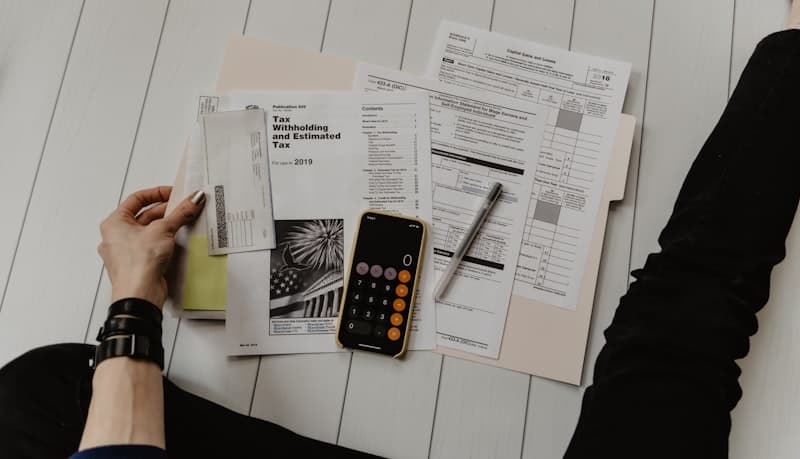
Property taxation in Pakistan confuses buyers for one structural reason: three different governments tax the same transaction. The federal government (FBR) collects advance income taxes and capital gains tax, the province collects stamp duty and annual property tax, and your housing society adds its own transfer fees on top. This guide maps every layer, with indicative rates and worked examples. One warning up front, and we mean it: rates in this article are indicative as of early 2026 and change with every Finance Act and provincial budget. Verify current figures with FBR and your provincial authority — or your tax adviser — before you transact.
What taxes do you pay when buying property in Pakistan?
FBR advance tax under section 236K (paid by the buyer)
Every buyer pays advance income tax at the time of transfer, collected by the registrar or society and deposited with FBR. The rate depends on two things: the property value (per the FBR valuation table or declared price, whichever is higher) and your tax status. Recent Finance Acts have used a three-tier structure — filer, late filer, and non-filer — with slabs by value. Indicatively, filers have paid low single-digit percentages on the value slab, late filers roughly double, and non-filers several times the filer rate. The 2025 budget cycle cut buyer-side rates to encourage transactions while raising seller-side rates, which shows how quickly the balance shifts year to year.
For a filer buying a PKR 2 crore house at an indicative 1.5% to 2.5%, the 236K bill is roughly PKR 3 to 5 lakh — adjustable against your income tax for the year. A non-filer on the same house could face several times that, which is why the single most profitable piece of tax planning for most buyers is simply filing a return before the transfer.
Stamp duty and registration fees (provincial)
Stamp duty is paid on the instrument of transfer, calculated on the higher of declared value and the provincial valuation table. Indicative provincial picture:
| Province | Indicative stamp duty | Notes |
|---|---|---|
| Punjab (urban) | Around 1% | Plus registration and related fees; e-stamp system calculates automatically |
| Sindh | Roughly 1% to 2% plus registration | Karachi transfers also involve society/authority charges |
| KPK | Roughly 2% range historically; periodically revised | Confirm with the local registrar |
| Islamabad (ICT) | Own schedule; CVT has applied to ICT transfers in past years | Check current ICT rates before budgeting |
Capital value tax (CVT) deserves a special mention: the old federal CVT on property was devolved and largely absorbed into provincial regimes, but CVT-type levies have resurfaced in specific contexts (notably Islamabad transfers and the separate federal CVT on foreign assets). Treat CVT as a “check whether it applies here” item rather than a universal cost.
What taxes do you pay when selling property in Pakistan?
Advance tax under section 236C (paid by the seller)
The seller’s mirror image of 236K, collected at transfer on the gross consideration. Filer rates have been in the low-to-mid single digits by value slab (the 2025-26 budget moved filer rates upward into the 4.5% to 5.5% indicative range), with late filers and non-filers paying substantially more. For filers it is adjustable; the practical effect is that FBR collects part of your capital gains tax in advance whether or not you ultimately owe it.
Capital gains tax (CGT) on property
CGT applies to the gain — sale price minus cost — and the regime split in mid-2024:
- Property acquired on or after 1 July 2024: flat-rate CGT for filers (15% indicatively) regardless of how long you hold, while non-filers are pushed to normal slab rates with a minimum floor.
- Property acquired before 1 July 2024: the older holding-period regime generally continues — higher rates for quick flips, tapering to zero after a holding period that differed for plots, constructed property and flats.
The direction of policy is clear even if the numbers move: short-term speculation is taxed, genuine long-term holding less so, and non-filers worst of all. If you are selling at a large gain, get a computation done by a tax practitioner before fixing your asking price; the CGT difference between regimes can change your net proceeds by lakhs. Sellers should also read our guide on how to sell property fast in Pakistan to time the market alongside the tax year.
FBR valuation tables vs DC rates: which value applies?
Pakistan prices the same property three ways. The market price is what you actually pay. The FBR valuation table value drives federal taxes (236C, 236K, CGT). The DC rate drives provincial stamp duty. Federal tables were introduced precisely because declared prices hugged the artificially low DC rates; FBR has revised its tables upward in stages toward market value. Practical consequences:
- Your tax challans may show a value different from your sale agreement. That is normal; tax is computed on the higher of declared and table value.
- Under-declaring the price below table values achieves nothing on tax and creates problems later — your recorded cost basis is lower, inflating your CGT when you eventually sell.
- Table values vary block by block. Two adjacent streets can fall in different valuation categories, so pull the actual table entry for your specific area from the FBR website rather than assuming.
What is the annual property tax (UIPT) in Punjab?
Owning built property carries a yearly provincial tax. In Punjab, the Urban Immovable Property Tax (UIPT), administered by the Excise, Taxation and Narcotics Control Department, is assessed on the annual rental value of the property per official valuation tables that factor in location category, covered area, and use. Key features:
- Owner-occupied residential property is taxed at a fraction of the rate applied to rented property.
- Commercial property pays substantially more than residential.
- Small owner-occupied houses (commonly up to 5 marla in lower categories) have enjoyed exemptions — check current thresholds.
- Paying early in the fiscal year typically earns a rebate; late payment attracts surcharge.
Sindh and KPK run equivalent annual property taxes through their excise departments, and Islamabad bills through the civic administration. If you are modelling total cost of ownership — purchase taxes, annual UIPT, and financing — our property tax calculator and mortgage calculator will do the arithmetic for you.
Worked example: taxes on a PKR 2.5 crore house in Lahore
Suppose a filer buys a 10 marla house in an LDA-approved scheme for PKR 2.5 crore, with the FBR table value at PKR 2 crore and the DC rate lower still. Indicatively:
| Item | Basis | Indicative amount |
|---|---|---|
| 236K advance tax (buyer, filer) | ~2% of PKR 2.5 crore | PKR 500,000 (adjustable) |
| Stamp duty (Punjab urban) | ~1% of recorded value | PKR 250,000 |
| Registration and incidentals | Fees and challans | PKR 50,000–100,000 |
| Seller’s 236C (filer) | ~4.5%–5.5% of value | Seller’s account, adjustable |
The buyer’s out-of-pocket on transfer day lands around PKR 8 to 9 lakh — call it 3% to 3.5% — before any society fees. The same buyer as a non-filer could see the 236K line alone exceed PKR 25 lakh. No other single decision moves the bill that much.
The bottom line
Three rules carry you through Pakistani property taxation. First, be a filer before you buy or sell; the rate differential dwarfs every other saving. Second, budget taxes into your offer — a deal that works at the asking price may not work after 3% to 5% in transfer costs, which our property transfer guide breaks down step by step. Third, never rely on last year’s rates. Every Finance Act since 2022 has rewritten some part of 236C, 236K or CGT. Check the current FBR rate card and your province’s schedule the week you transact, not the month before.
Frequently Asked Questions
How much tax does a buyer pay when purchasing property in Pakistan?
A buyer pays FBR advance tax under section 236K (slab rates by property value, far higher for non-filers), provincial stamp duty (around 1% in urban Punjab), registration-related fees, and for society plots the society transfer fee. As a planning figure, an active filer buying in urban Punjab might budget roughly 3% to 5% of value in taxes and fees; a non-filer can face several times that on the 236K component alone. Rates change with each Finance Act, so verify before paying.
What is the difference between 236C and 236K?
Both are FBR advance income taxes collected at the time of transfer. Section 236C is collected from the seller on the sale consideration; section 236K is collected from the buyer on the purchase. For filers both are adjustable against final tax liability. Non-filers pay sharply higher rates, and for them 236C is treated harshly under the rules introduced in recent Finance Acts.
How is capital gains tax on property calculated in Pakistan?
For property acquired on or after 1 July 2024, the Finance Act 2024 introduced a flat CGT for filers (15% on the gain) regardless of holding period, with non-filers taxed at normal slab rates subject to a minimum. Property acquired before that date generally stays under the older holding-period regime, where the taxable portion of the gain falls each year and reaches zero after several years. The rules have changed in three consecutive budgets, so confirm the current law with FBR or a tax adviser before selling.
What are FBR valuation tables and DC rates?
DC (deputy commissioner) rates are provincial valuation tables used for stamp duty and provincial taxes. FBR valuation tables are separate federal tables used to compute 236C, 236K and CGT. FBR values are generally higher than DC rates but still below open-market prices in many areas. Your taxes are calculated on the higher of the declared price and the applicable table value, so the same plot can have three different "values" on paper.
Do non-filers pay more property tax in Pakistan?
Yes, dramatically more. Non-filer rates for advance tax on purchase have run well into double digits in recent years versus low single digits for filers, and recent Finance Acts have moved toward restricting large property purchases by ineligible non-filers altogether. If you plan to transact property, becoming a filer beforehand is usually worth tens of lakhs on a crore-level deal.
Is there an annual property tax in Pakistan?
Yes. Provinces levy an annual tax on built property — in Punjab it is the Urban Immovable Property Tax (UIPT), assessed on annual rental value per official valuation tables, with owner-occupied residences taxed more lightly than rented or commercial property. Islamabad has its own CDA/MCI property tax. Bills are issued yearly and early-payment rebates are common.
Related Guides


Ready to Find Your Property?
Browse thousands of houses, flats and plots across Pakistan — listing is 100% free.